
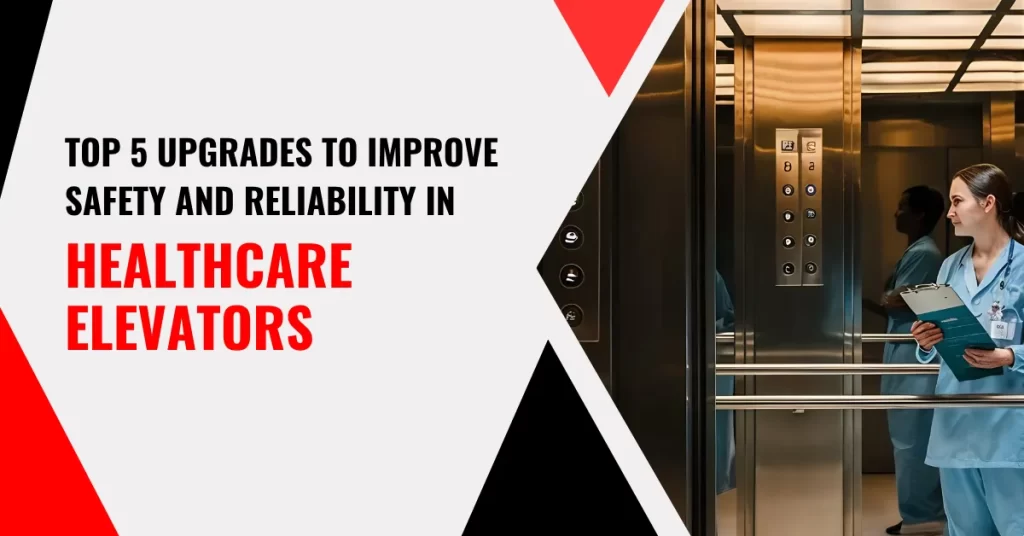
Moving patients, providers, and medical equipment up and down from floor to floor is necessary for the operations of healthcare facilities. Without elevators available for safe and fast transport of humans and medical supplies, vertical travel within buildings is impossible. Even a small break or a slight wait for an elevator can lead to compromised patient care and operational workflows. Therefore, renovation of elevators is essential for patient care systems that focus on safety and reliability.
At IEC LIFTS, we specialize in designing high-performance elevators specifically designed for hospitals, clinics, and healthcare environments. Our elevators are designed with innovative designs, technology, and comfort for seamless and safe vertical travel with healthcare environments.
Let us explore upgrades that improve the safety and reliability of healthcare elevators.
1. Smart Control Systems for Speed and Safety
Many hospitals require a high-volume solution, asking elevators to function more efficiently in high-traffic environments. Destination control systems and microprocessor-based controllers can significantly enhance elevator performance when dealing with high volumes by utilizing sophisticated passenger demand analysis with rational elevator assignments that minimize waiting and overall energy use.
IEC LIFTS deploys smart control panels in its models Hospital Bed Elevators and Passenger Elevators, advanced systems based on intelligent logic. This elevator control modernization minimizes wait time by improving the overall traffic flow efficiency during congestion hours (i.e., emergencies and shift changes), getting your patient to their destination quickly and comfortably.
One of the best investments for elevator modernization in hospitals typically is upgrading the elevator controls to a smart control system to improve safety and reliability.
2. Emergency Power Backup & Auto Rescue Devices
Power outages are always unpredictable and never favorable, particularly in a large hospital building. Elevators need to work as their design specifies to avoid inconvenience or safety issues. An Automatic Rescue Device (ARD) and UPS backup will ensure that in a power failure, the elevator can safely get to the nearest floor.
IEC LIFTS puts an ARD system in place as a standard feature on all hospital elevator models. This feature allows patients and medical staff to never be trapped in the lift during a power failure (a requirement for elevators in healthcare settings). For hospitals and care facilities that are on 24-hour shifts, the ARD is an enhancement to create peace of mind and reliability.
If you are wondering how to improve safety in healthcare elevators, consider that emergency backup systems are one of the most important steps.
3. Touchless and Antimicrobial Features for Safety and Hygiene
Hygiene and infection control are a top priority in hospitals. Traditional elevator buttons and panels tend to harbor bacteria and viruses. The use of touchless/elevator control panels, buttons activated with voice commands, and antimicrobial surfaces may improve hygiene practices.
At IEC LIFTS, our hospital elevators utilize stainless-steel interiors with antibacterial coating, and we offer optional systems for touch-free operation that allow staff or patients to select floors with motion sensors or applications used on mobile devices.
These advancements illustrate the changing elevator technology landscape in healthcare to create a cleaner and safer environment. These improvements are especially beneficial in sensitive areas, such as ICUs, operation theaters, and emergency departments.
4. Operating Systems that Offer Happy, Silent, Jerk-Free Journeys
When it comes to the hospital environment, patients need an elevator that rides smoothly and quietly. Patients lying on a stretcher or in a wheelchair can develop fear and distress if they experience any jolt, vibration, or noise. “Modernizing an elevator can involve upgrading to gearless traction machines and including a variable frequency drive (VFD) to achieve a smooth ride.”
IEC LIFTS utilizes precision-engineered components in the design of its Machine Room Less (MRL) Elevators and Hospital Bed Elevators. This is helpful to the riding experience, while providing reduced vibration and a lower reliance on energy consumption. VFDs also decrease strain on the machine components and minimize service or maintenance, in addition to feeling more pleasant.
In a facility focusing on modernization of hospital elevators, establishing a comfortable mode of transportation for the patients is synonymous with safety, while also optimizing through transitional improvements for both the patient riding experience and hospital staff attempting to perform their duties.
5. Advanced Maintenance and Monitoring Systems
Elevator outages can interrupt hospital operations. Real-time monitoring and regular maintenance are essential when it comes to overcoming unscheduled outages. Today, elevators can be continuously monitored remotely to alert technicians if an elevator experiences an issue.
IEC LIFTS has developed IoT-based elevator monitoring systems that allow elevators to monitor their performance data and notify our service team if any issues arise during operation. This proactive and preventive system allows you to stay ahead of needing to conduct maintenance and responds to the elevator emergency quickly.
These technologies allow hospitals to operate confidently every day with elevators that function properly. Upgrades such as these illustrate how far elevators in hospitals have progressed in modernization—from simple, functional elevators to smart, self-monitoring machines.
Why Make IEC Lifts Your Choice for Healthcare Elevator Modernization?
IEC LIFTS aims to provide forward thinking elevator solutions created specifically for the healthcare environment. The halls of your facility will be serviced by our products – hospital bed elevators, passenger lifts, MRL elevators, and goods lifts – each delivering the best possible experience, comfort, and safety.
When it comes to modernization, we will replace your outdated systems with the latest systems that offer ARD, touchless controls, smart controllers, and energy efficient drives. With years of experience with elevator technology in a medical facility, you can feel confident that each update will be up to code regarding hospital structure and usages.
We realize that hospitals do not stop working. Each one of our projects is planned so its execution will cause little or no interruption to patient care. Our only goal is to make healthcare elevators safer, smarter, and more dependable, using technology.
Conclusion
Hospital elevators are not just a means of transportation; they are part of the life- saving infrastructure. By upgrading to smart controls, backup, sanitary features, smooth-running technology, and enhanced monitoring, a hospital can make a significant improvement to daily operations.
When considering how to improve your elevator safety in healthcare, modernization is the key. When you partner with IEC LIFTS, you are guaranteed that everything meets the international safety standards and that they are comfortable and dependable.
With modernization of hospital elevators continuously improving, IEC LIFTS is thrilled to support all hospitals and healthcare facilities in creating a safer, smarter, and more efficient future.

